Technical Notes
Technical notes on vibration isolation: fundamentals, VC criteria, active vs passive systems and site requirements for SEM, TEM, AFM and semiconductor tools.
Fundamentals of Vibration
Learn the basic principles and theory of vibration isolation systems. Covers classification of vibration, measurement units, natural frequency, resonance, and more.
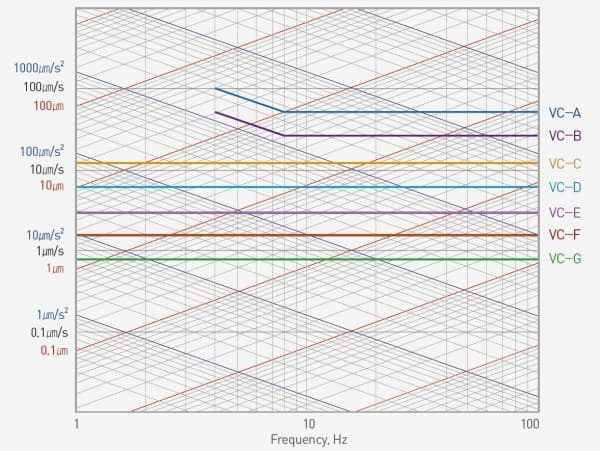
Generic Vibration Criteria
Understand the globally recognized VC curve standards. Explains equipment-specific vibration criteria and octave band analysis methods.
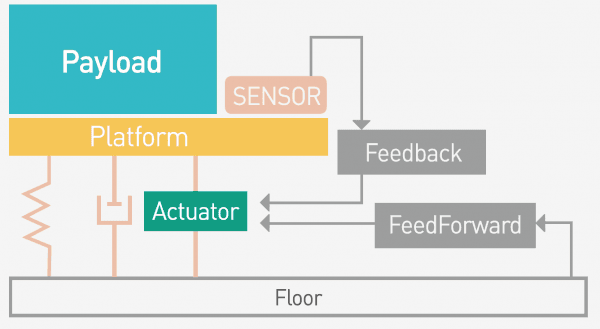
Active Vibration Isolation System
Discover active isolation technology using sensors and actuators. Explains feedback/feedforward control algorithms and 6-DOF control.
Passive Vibration Isolation System
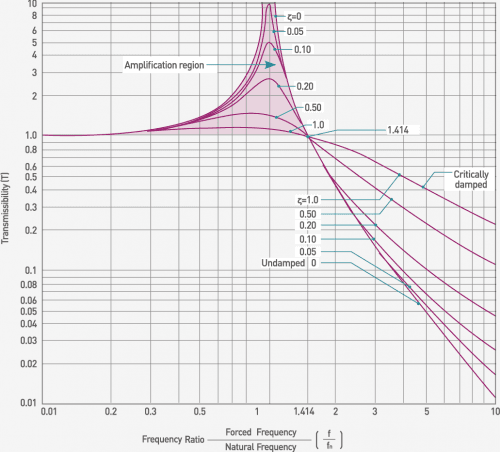
Learn the principles of passive isolation using springs and dampers. Explains the relationship between transmissibility, natural frequency, and damping ratio.
Active vs. Passive Vibration Isolation
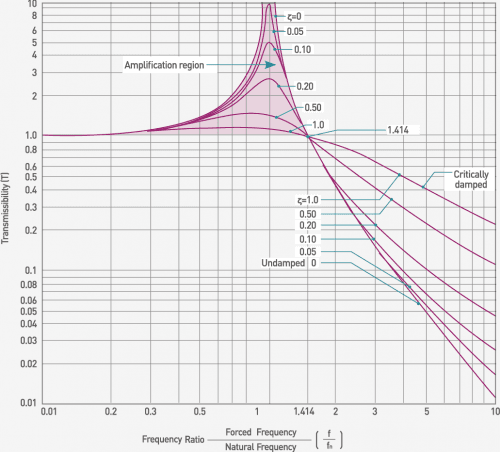
Transmissibility intuition, the damping trade-off, and a floor-survey decision checklist for choosing between active and passive isolation.
How Active Vibration Cancellation Works
A walk through the signal chain — sensing, DSP control, and actuation — including low-frequency sensing, loop stability, and 6-DOF control.
Vibration Isolation for SEM & AFM
How floor vibration corrupts SEM images and AFM data, how to read VC criteria, and how to match isolation platforms to each instrument.
How to Choose a Vibration Isolation Platform
Passive or active, table or platform — the order in which the selection decision actually gets made, and the five questions to put to a supplier before you sign.

How to Choose an Optical Table
From honeycomb structure to table grades, breadboard trade-offs, support matching, and sizing — a practical guide to the buying decision.
Faraday Cage Limits in Precision Labs
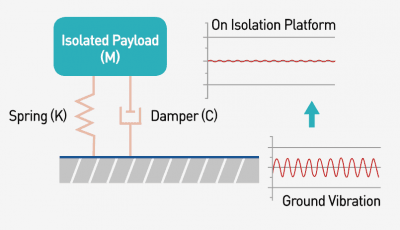
Where shielding ends — magnetic fields and floor vibration — and why electron microscopes pair EMI control with magnetically quiet active isolation.
Vibration Isolation for Semiconductor Metrology
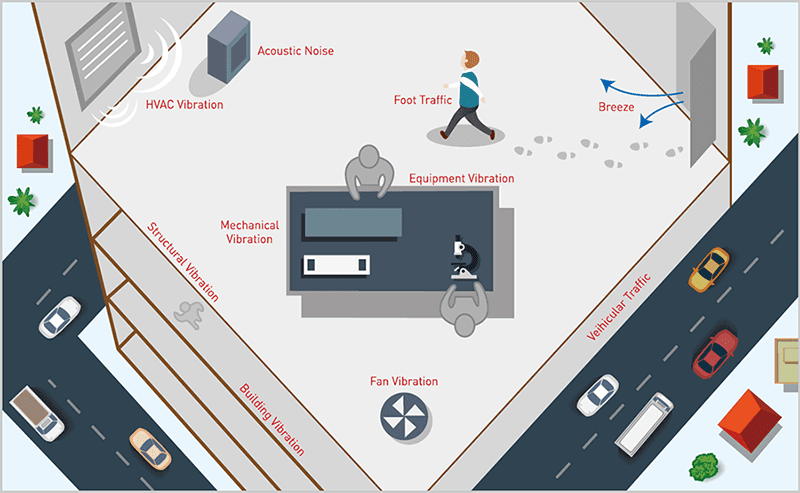
Why metrology tools are vibration-limited, which VC criteria apply, the raised-floor problem, and choosing active-pneumatic vs. base platforms.
Electron Microscopes: How They Work
How electron microscopes work, SEM vs. TEM, the installation environment that limits real-world resolution, and matching DVIA isolation.

Vibration Isolators: Types & Selection
A field guide to vibration isolators — the physics every type shares, where elastomer, spring, and pneumatic mounts fit, and when only active isolation will do.
Feedforward Control Explained
How feedforward control cancels a disturbance before it arrives, why it always pairs with feedback, and where it earns its keep in active vibration isolation.
Vibration Sensors: How They Work
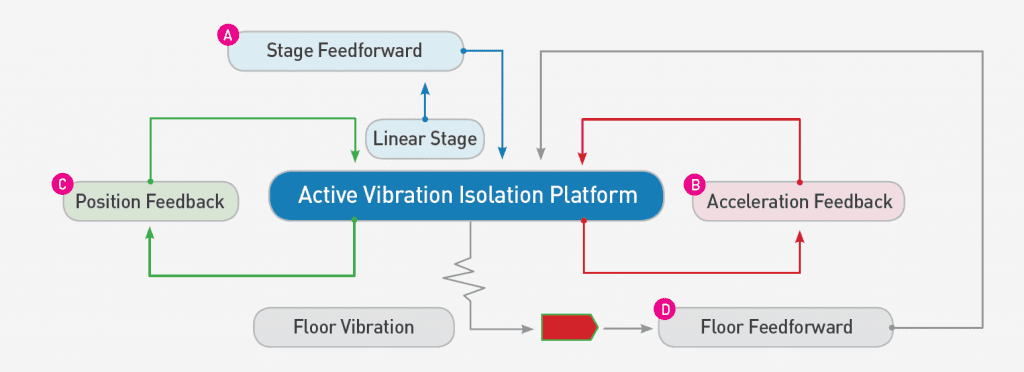
A practical guide to vibration sensors: how accelerometers, geophones, and non-contact probes work, and how closed-loop active isolation platforms put them to work.
Electron Microscope Room Requirements
What the site survey checks — vibration, magnetic fields, acoustics, airflow — with a pre-installation checklist built from 1,000+ installations.
How Much Floor Vibration Can an SEM Tolerate?
The SEM floor vibration spec explained — which VC curve applies, one-third-octave measurement, vendor spec sheets, and what to do when the floor fails.

Vibration Isolation for AFM
Why AFM is the most vibration-sensitive instrument you own, where Z-noise comes from, and how to pick between tabletop and modular active platforms.
FIB-SEM Vibration Isolation
FIB-SEM milling turns vibration into machined error, not just blur — site requirements, the low-frequency gap, and real Crossbeam, Helios and Amber installations.
TEM & Cryo-EM Vibration Isolation
What TEM and cryo-EM vibration requirements actually specify — VC criteria, the low-frequency problem, and how DVIA-ML, DVIA-MB and DVIA-ULF close the gap.
Benchtop & Tabletop Vibration Isolation
Benchtop (tabletop) isolation for compact SEMs, AFMs and balances — why the low-frequency problem follows the instrument onto the bench, and how the DVIA-T solves it.
Large Optical Table Load Analysis
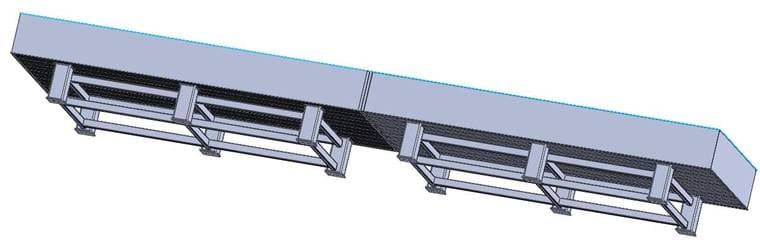
Finite-element verification of a 7 m × 1.5 m DVIO optical table under a 10 t load — why the honeycomb core is modeled directly, and the deflection and stress verdict.
Cleanroom Vibration Isolation
Why cleanroom isolation differs from the lab — access-floor dynamics, settling time as a throughput spec, and where DVIA-P platforms and DVIF foundations fit.
Measured, Not Assumed
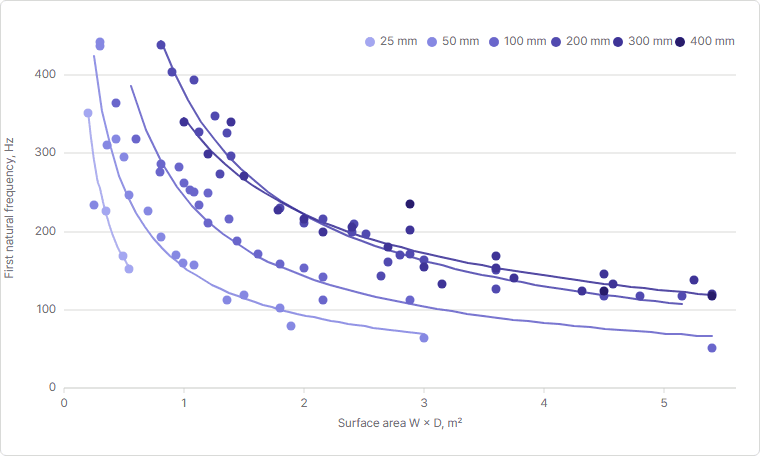
Compliance, natural frequency and flatness of DAEIL SYSTEMS optical tabletops and breadboards, read from 154 impact-tested and 600 flatness-measured units.
Need More Information?
Our technical support team is ready to answer your questions. Feel free to contact us anytime.