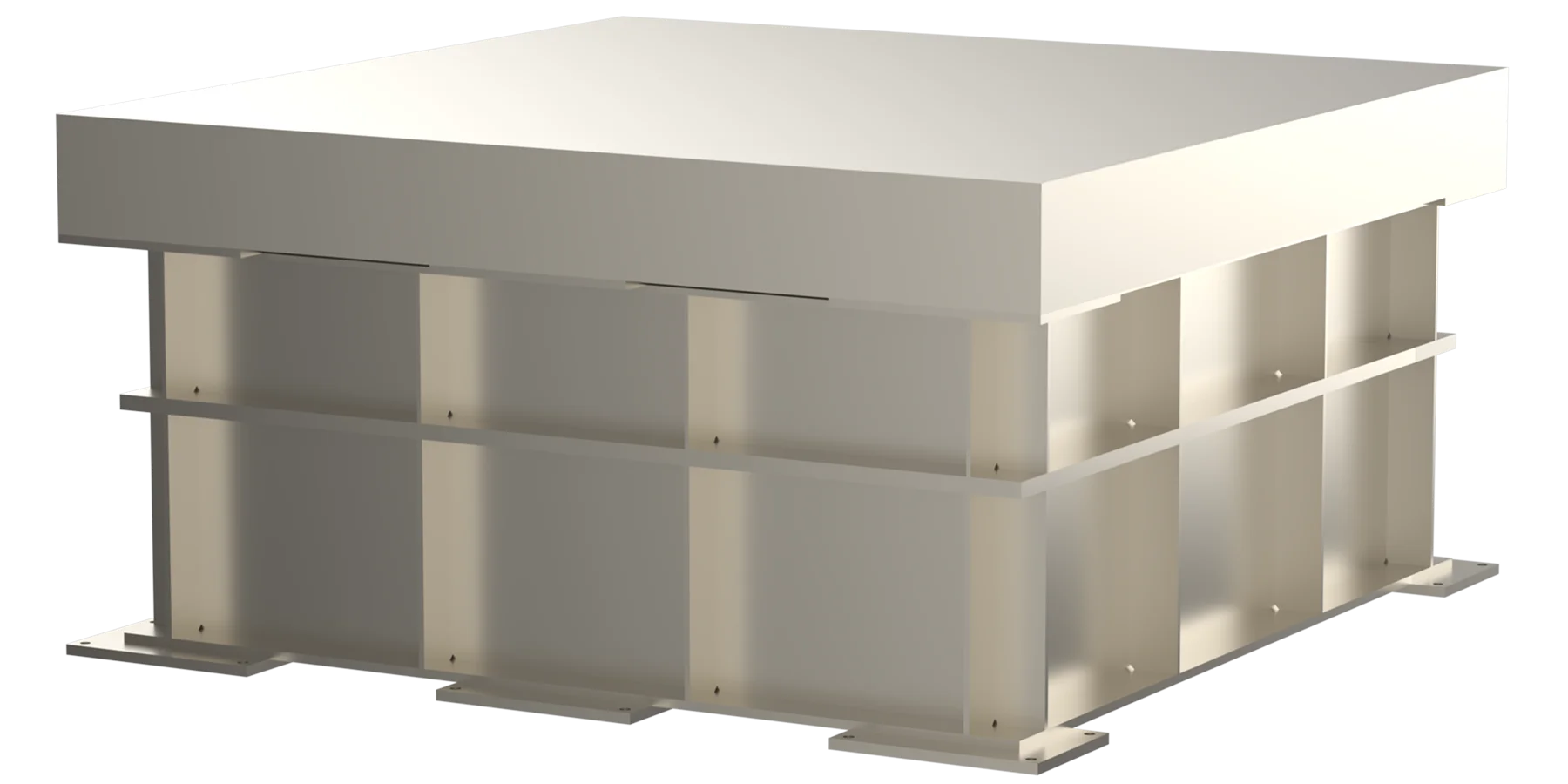
Vibration Isolated Foundation
Protect critical semiconductor tools from raised floor vibration.
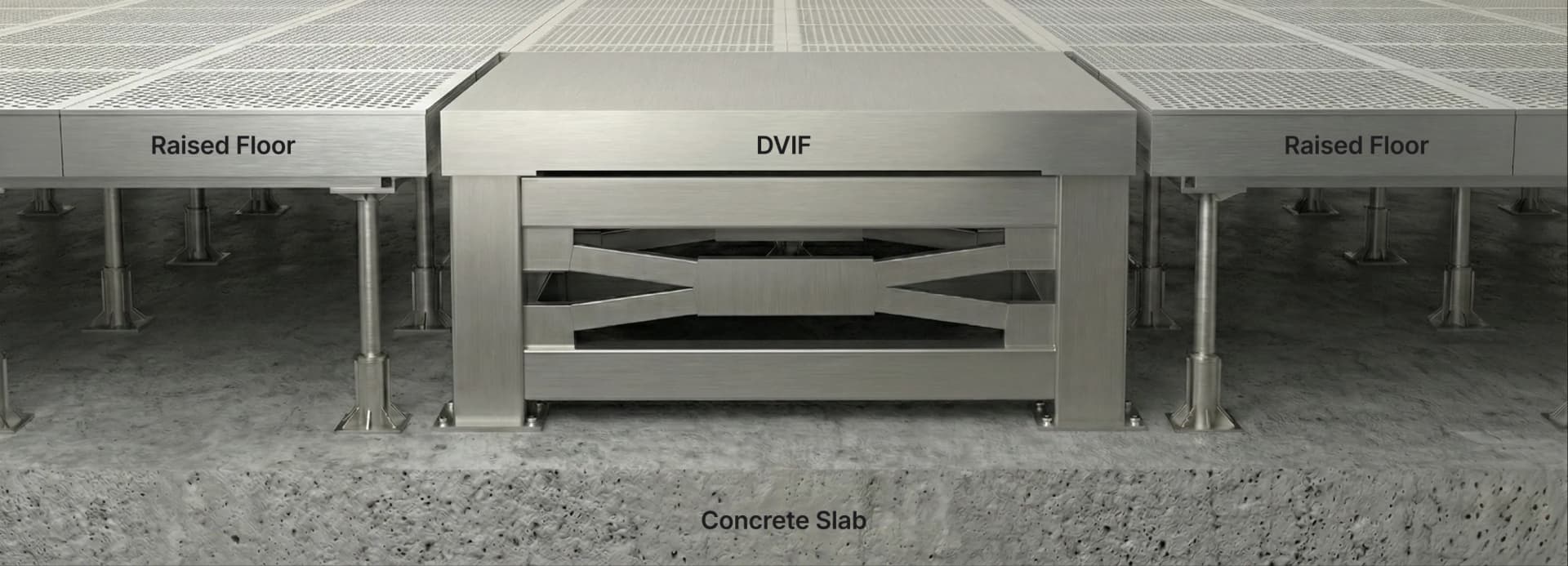
Raised floors can exhibit higher vibration response than the underlying structural slab due to lower stiffness and stronger excitation from local activity (personnel traffic, carts, nearby equipment). DVIF provides a mechanically independent foundation designed to bridge the gap between the raised floors and vibration-sensitive tools in cleanrooms, providing the bedrock stability required for vibration-sensitive semiconductor tools.
The Engineering Challenge: The Soft Floor Risk
Semiconductor cleanrooms utilize raised access floors (RAF) for airflow and utility management, but these structures inherently lack the stiffness required for next-generation metrology. From a structural dynamics perspective, raised floors act as flexible diaphragms that amplify ambient vibration and transmit transient noise from personnel and carts directly to the equipment.
Installing a yield critical tool directly on a raised floor tile introduces a soft load path that compromises image stability and measurement repeatability. To achieve the vibration criteria (VC) required by semiconductor metrology tools, the equipment must be mechanically decoupled from this flexible grid.
The Solution: The Inertial Foundation
The DVIF Series solves this problem by establishing a rigid inertial foundation anchored directly to the building's structural slab, bypassing the raised floor entirely. This design philosophy relies on three core mechanical principles:
Complete Mechanical Separation
We maintain a physical gap typically 10 to 20 millimeters between the DVIF inertial foundation and the surrounding raised floor grid. This gap ensures that the vibration of the surrounding raised floor is not transmitted to the vibration-sensitive tool.
High-Stiffness Inertial Mass: Mode Control in 1 – 100 Hz
To guarantee data integrity, the foundation must not amplify floor vibrations within the critical 1–100 Hz bandwidth. The DVIF utilizes a heavy-duty steel frame completely filled with reinforced concrete. This composite design creates a monolithic structure with exceptional stiffness-to-mass ratio. By maximizing structural stiffness, we drive the foundation's natural frequency high enough to avoid resonance with the building's ambient vibration. Unlike hollow steel frames, which can amplify low-frequency noise and flex under load, our solid concrete-filled structure provides the rigid support necessary for heavy, dynamic metrology tools.
Comprehensive Site Survey & Engineering
The deployment of a DVIF inertial foundation is a rigorous engineering project that begins with a total site characterization. DAEIL engineers establish a precise reference point for the equipment installation and perform a detailed site vibration survey. This includes measuring the Power Spectral Density of the structural slab to verify that the building's ambient vibration meets the tool manufacturer's specifications.
Structural Mapping and Architectural Integration
To design a truly custom foundation, our field engineers map the physical architecture of the facility in detail. We measure the dimensions of the access floor panels and the exact height from the waffle slab to the top of the floor. Using the third-angle projection method, we analyze how the raised floor aligns with the underlying waffle slab grid. We document the thickness and spacing of the waffle slab beams, as well as the location, size, and support direction of any reinforcement H-beams used to stabilize the grating. This data allows us to design a structure that transfers loads directly to the strongest structural elements of the FAB.
Environmental Interference and Predictive Modeling
Beyond the slab itself, our survey identifies any interfering structures or obstacles found beneath the access floor or directly under the installation site. We also establish a precise reference point for the equipment installation and determine the optimal location for the external controller, whether it is installed on the access floor or integrated below it. This exhaustive data collection informs our Structural Dynamics and FEA analysis, where we model the foundation's mass, stiffness, and center of gravity relative to the tool. This predictive modeling ensures the coupled system maintains a high natural frequency and avoids resonance with the building's dominant frequencies.
System Configuration and Construction
The DVIF is a composite system tailored to the specific load and footprint of the tool. The core consists of a reinforced inertial mass, cast from concrete or steel composite to match the tool's center of gravity. This mass is secured via an anchoring interface using chemical or mechanical anchors deeply embedded in the structural slab to ensure a continuous load path. To maintain cleanroom standards, the foundation includes a high-performance finish, utilizing epoxy-coated surfaces or stainless steel cladding to prevent particulate generation. For environments with exceptionally high noise floors, an optional damping layer of viscoelastic material can be integrated into the foundation structure to further dissipate structural energy.
Crucially, this inertial mass is structurally tuned based on the specific waffle slab grid and H-beam reinforcement data captured during our site survey. By aligning the foundation's load points with the facility's strongest structural elements, we maximize effective stiffness and drive the system's natural frequency high enough to avoid resonance with the building's ambient vibration. Unlike hollow steel frames, which can amplify low-frequency noise and flex under load, our solid concrete-filled structure provides the rigid, verified support necessary for heavy, dynamic metrology tools.
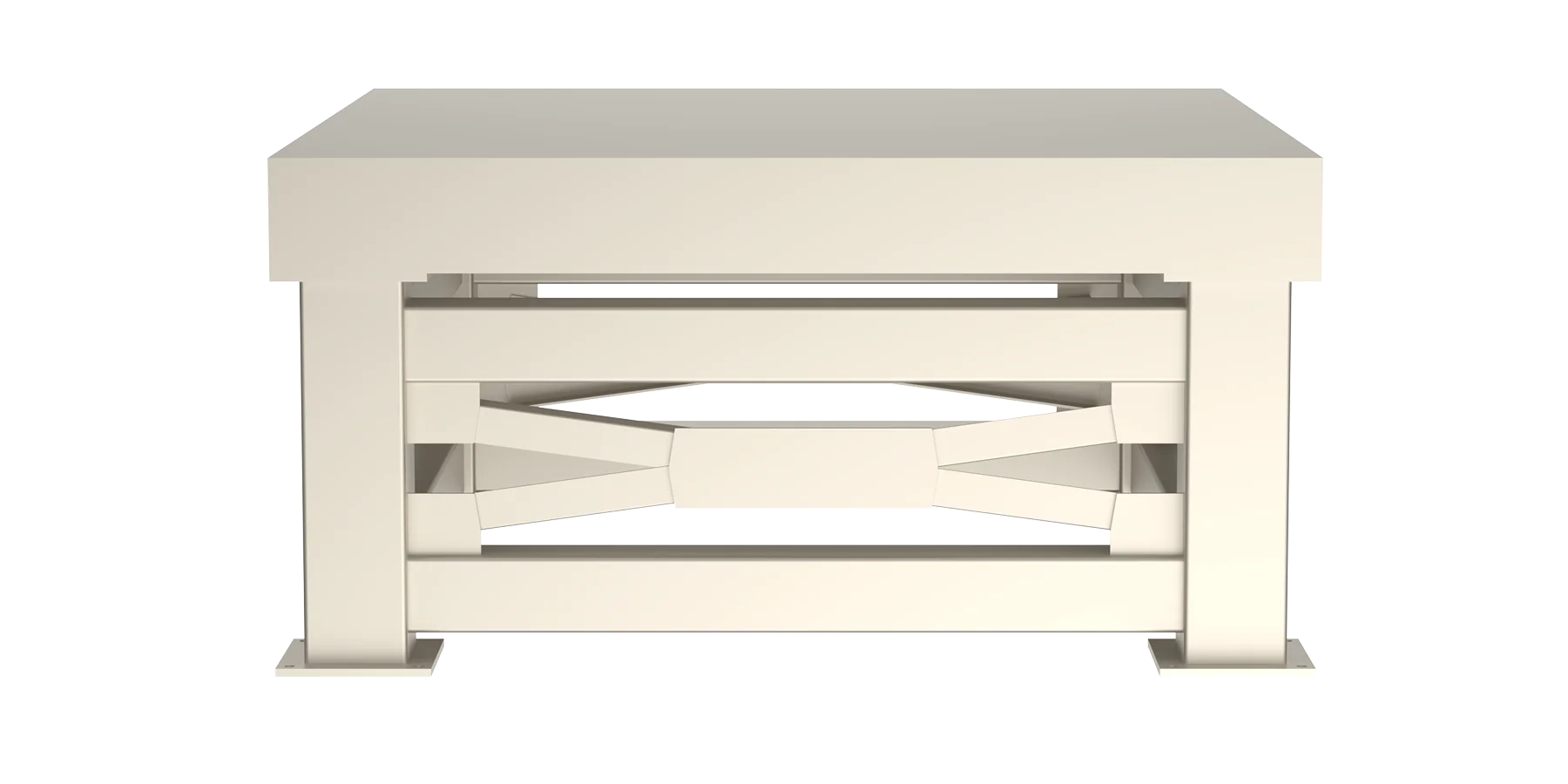
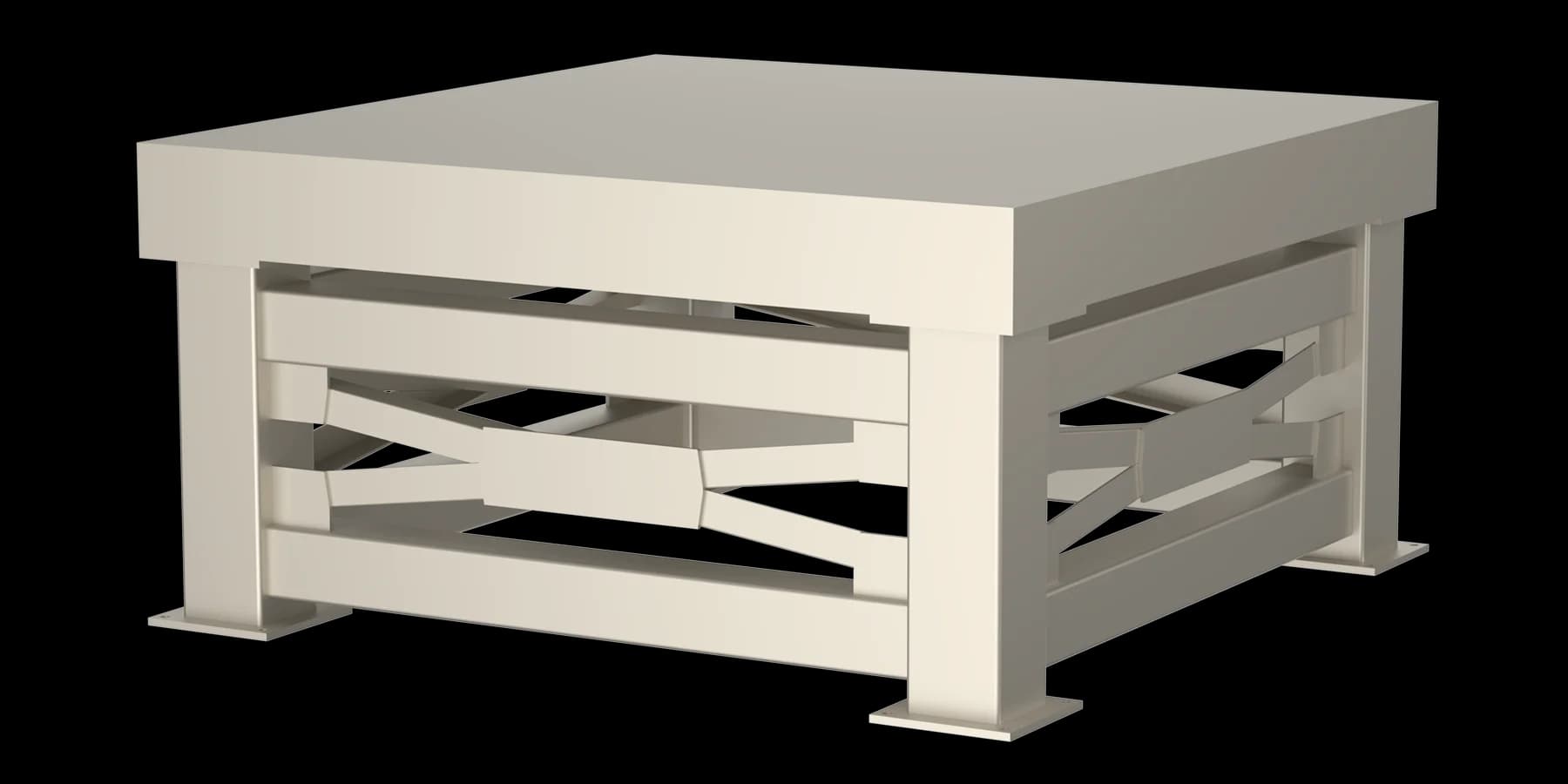
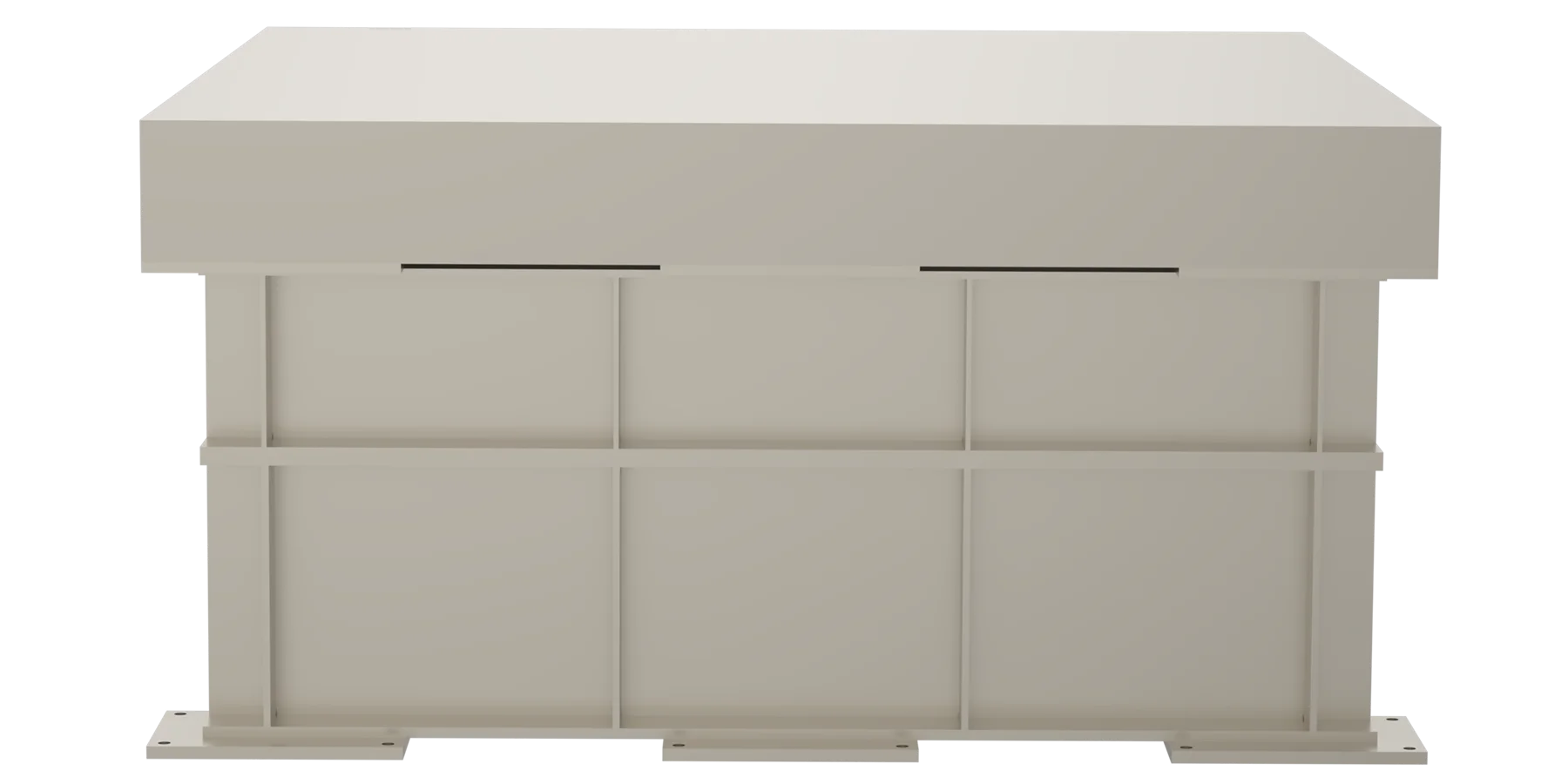
DVIF Structural Concept Layout