Vibration Isolation Case Studies
DAEIL SYSTEMS engineers active vibration isolation systems for the world's most demanding nanoscale imaging and metrology environments.
Series
Equipment Type
Manufacturer
All Case Studies
ASE Korea TESCAN FIB-SEM SOLARIS X2 GMH DVIA-ML1000 Installation Report
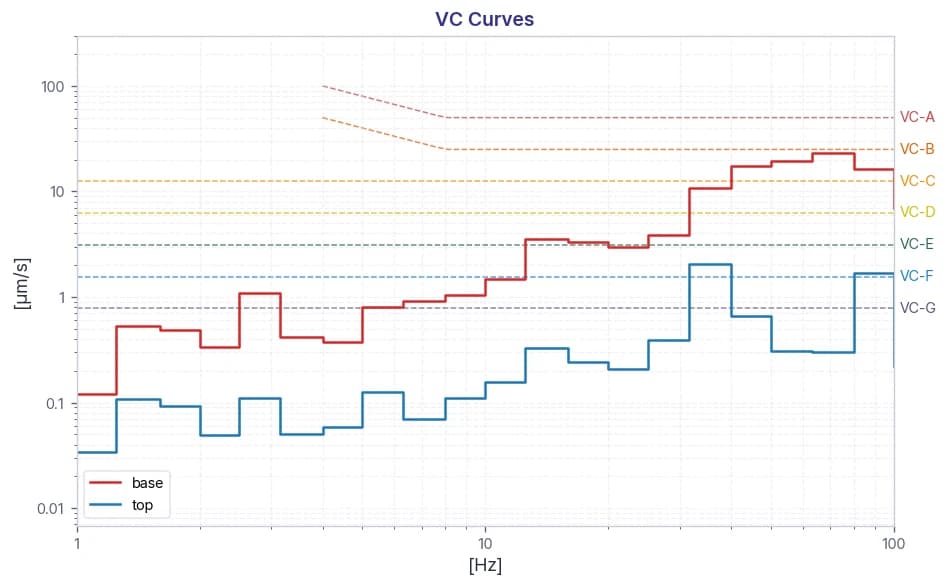
DVIA-ML1000 installation report (serial 260622R4) for a TESCAN FIB-SEM SOLARIS X2 GMH installed at ASE Korea PB1, 1CMD QO Lab, Electron Microscopy Room. Tuning was carried out on 2026.09.11 and vibration was measured with the equipment in the IDLE state. All three axes met the reference specification and achieved a PASS rating, with the vertical axis improving from VC-B to VC-E, the left-to-right axis from VC-E to VC-G, and the front-to-back axis from VC-B to VC-F.
Pharrics BV MPI Corporation Probe Station MPI TS150 DVIA-T67 (260402R1) Installation Report
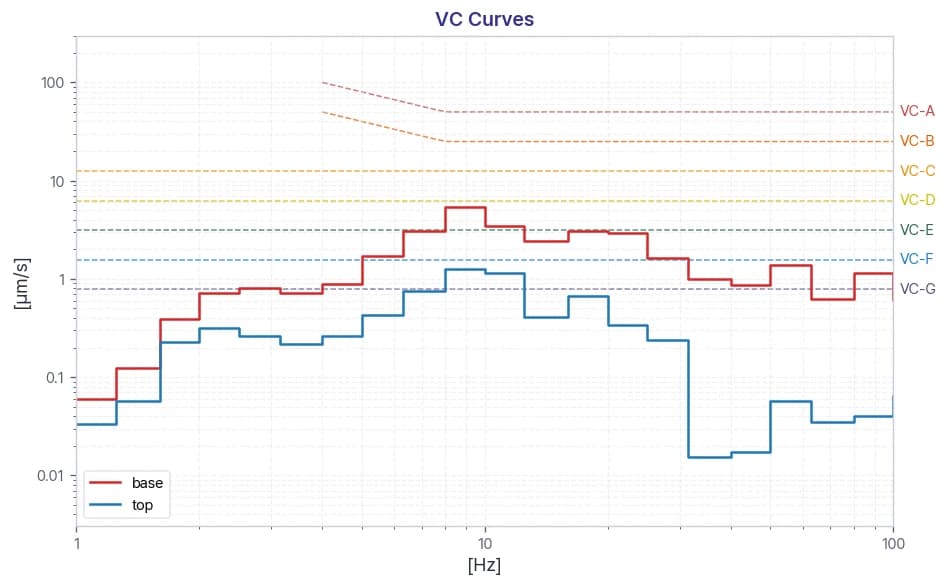
Installation report for the DVIA-T67 (serial 260402R1) installed for Pharrics BV in Leuven under an MPI Corporation MPI TS150 probe station. With no vibration specification defined, tuning and vibration measurements were performed with the probe station mounted on the system in the idle state. The results are presented as per-axis Autospectrum and VC Curve plots together with the IEST-RP-CC012.2 vibration criteria reference.
YIMOTECH Resonac Electronic Materials ZEISS Sigma 360 FE-SEM DVIA-ML1000 Installation Report
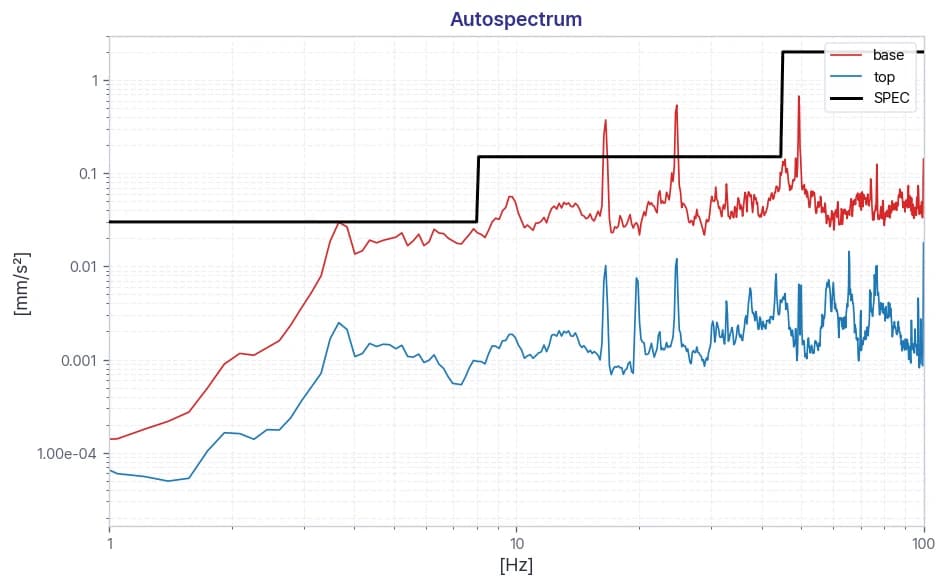
YIMOTECH ZEISS Sigma 360 FE-SEM DVIA-ML1000 installation report — the DVIA-ML1000 active vibration isolation platform was installed at Guangzhou for end user Resonac Electronic Materials, then re-tuned (2nd trial) and measured with the equipment Turned off. Against the Sigma 360 horizontal and vertical allowable vibration specification (mm/s² RMS, 1–100 Hz), the bare floor exceeded the limit on the vertical and front-to-back axes, while the DVIA-ML1000 platform passed on all three axes. The tuning request work order, the allowable vibration tables and the per-axis Autospectrum plots are published; no installation photographs were permitted at the site.
YIMOTECH ZEISS Sigma360 FE-SEM DVIA-ULF700 Installation Report
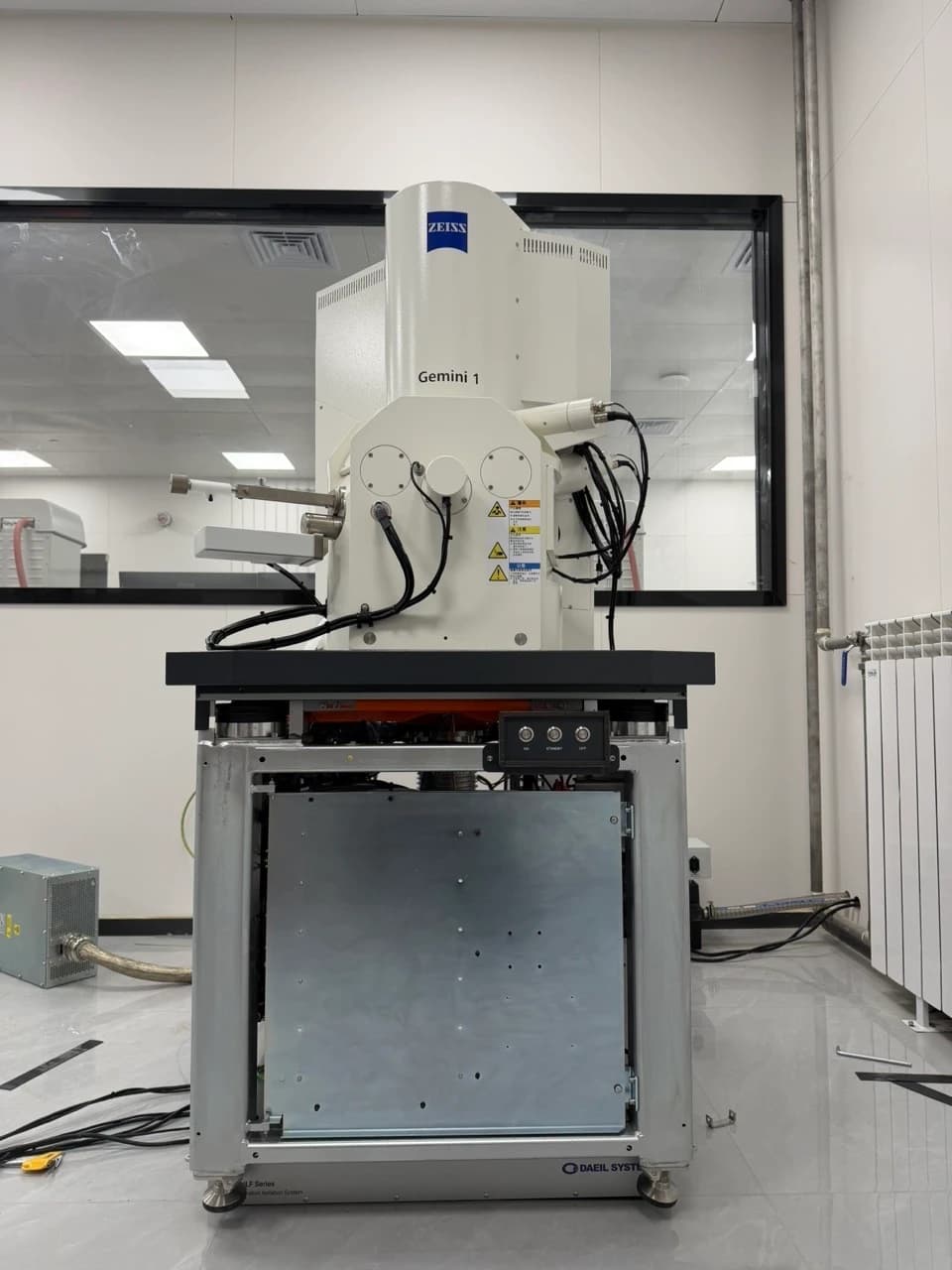
DVIA-ULF700 installation report (serial 260605R5) for a ZEISS Sigma360 FE-SEM at End User Inner Mongolia Xingfa Technology Co., Ltd. in Wuhai. Tuning was carried out on 2026.09.04 and vibration was measured with the equipment in the IDLE state at two points, the installation floor and the top surface of the DVIA-ULF700. At the floor all three axes failed the specified criterion; on the DVIA-ULF700 all three axes (Vertical, Left to Right, Front to Back) satisfied the ZEISS specification, confirming that the isolator attenuates the ambient vibration. Published figures: the tuning request work order, the per-axis Autospectrum traces captured from the UI program, and one installation photo.

Tier-1 Semiconductor Icheon OLYMPUS Microscope MX63L DVIA-T78 (260819S1) Installation Report
Installation report and demo test for the DVIA-T78 (serial 260819S1) installed in the 1F laboratory of the P&T4 building at a Tier-1 Semiconductor Icheon campus, under an OLYMPUS MX63L microscope. The microscope had no formally defined allowable vibration specification, but image resolution degraded and visible shaking appeared during operation, and the passive isolation table in use was not enough. Two demo tests on the DVIA-T78 and two baseline measurements on the passive table were taken with a B&K Front End Type 3040-A-040 and a PCB 393B05 accelerometer in the IDLE state. On the active platform all three axes settled to the VC-D to VC-E range, and the microscope image shaking and noise disappeared completely. All 24 per-axis Autospectrum and VC Curves plots are published together with the IEST-RP-CC012.2 vibration criteria reference.
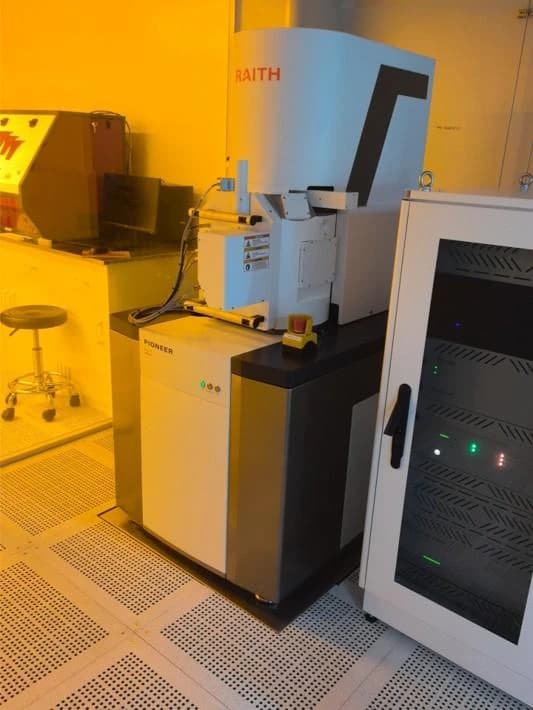
Hubei University of Technology RAITH Electron Beam Lithography Pioneer Two DVIA-ML1000 Installation Report
DVIA-ML1000 installation report (serial 260209R6) for a RAITH Electron Beam Lithography (Pioneer Two) installed at Hubei University of Technology, Wuhan. Tuning was carried out on 2026.08.25 and vibration was measured with the equipment in the Turned off state. The system provided effective attenuation across the frequency bands where meaningful floor vibration is present, and the site was confirmed suitable for equipment operation.