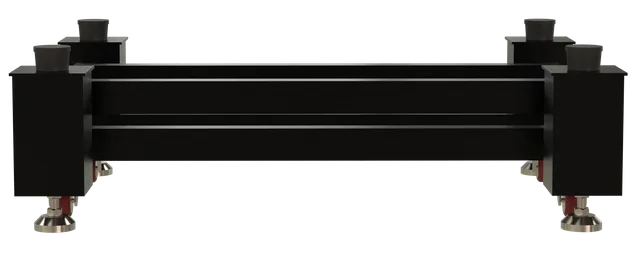
Rigid Support
Engineered for stable, high-load support.

Direct floor coupling
A solid connection. When "floating" is not required.
Rigid Supports mount the optical table directly to the floor through a stiff, hard-mount structure. This is ideal when your environment is already quiet, or when you need the table and floor to move together, such as when docking heavy auxiliary equipment. The rigid connection also improves center-of-gravity stability for tall or top-heavy setups.

Drift-free manual leveling
Level it once. Lock it in.
Instead of leveling valves, rigid supports use heavy-duty leveling feet with fine adjustment. After leveling, the height is held mechanically. There is no air settling, no gradual drift over time, and no automatic response to sudden load changes. You get a stable reference plane that stays where you set it.
Integrated mobility
Move it easily. Anchor it fast.
The tie-bar frame integrates industrial swivel casters directly beneath the support, so the system rolls as a single unit when you need to reposition the table. Once in place, you simply extend the leveling feet with wide floor pads to transfer the load from the wheels to the ground. The casters lift clear, the frame becomes rigidly supported, and the table is anchored in minutes. You get quick layout flexibility without leaving the system on compliant wheels during operation.
System Configuration
Choose the frame type that matches your lab.
Tie-Bar Frame.
Rigid geometry. Easier relocation.

The Tie-Bar configuration connects the four or six support legs with lower horizontal beams. This creates a unified "box" structure that significantly increases lateral stiffness and safety, especially when moving the table on casters.
Self-Standing Frame.
Modular Supports. Maximum Flexibility.

The Self-Standing configuration consists of four or six independent legs. This open design provides maximum legroom and under-table storage space, allowing you to roll cabinets or other equipment underneath without obstruction.
Finding Your Configuration
The choice comes down to how you interact with your workspace. If your priority is a rigid structure that allows for fast setup and easy relocation, the Tie-Bar Frame is your solution. If you require the freedom to place supports exactly where your complex layout demands, the Self-Standing Frame is the answer.
Specifications
| Tie-Bar Frame | Self-Standing Frame | |
|---|---|---|
| Frame Structure | ||
| Frame Material | Steel | |
| Frame Type | Tie-Bar Frame | Independent Supports |
| Mobility | Integrated Casters | Not Included |
| Max Load Capacity | 2000 kg | |
Ordering Information
Width Range: 1000 - 3600 mm
Depth Range: 600 - 1500 mm
Height Options: 400, 500, 600, 700, 800 mm
Type: Tie-Bar or Self-Standing
Optional Accessories
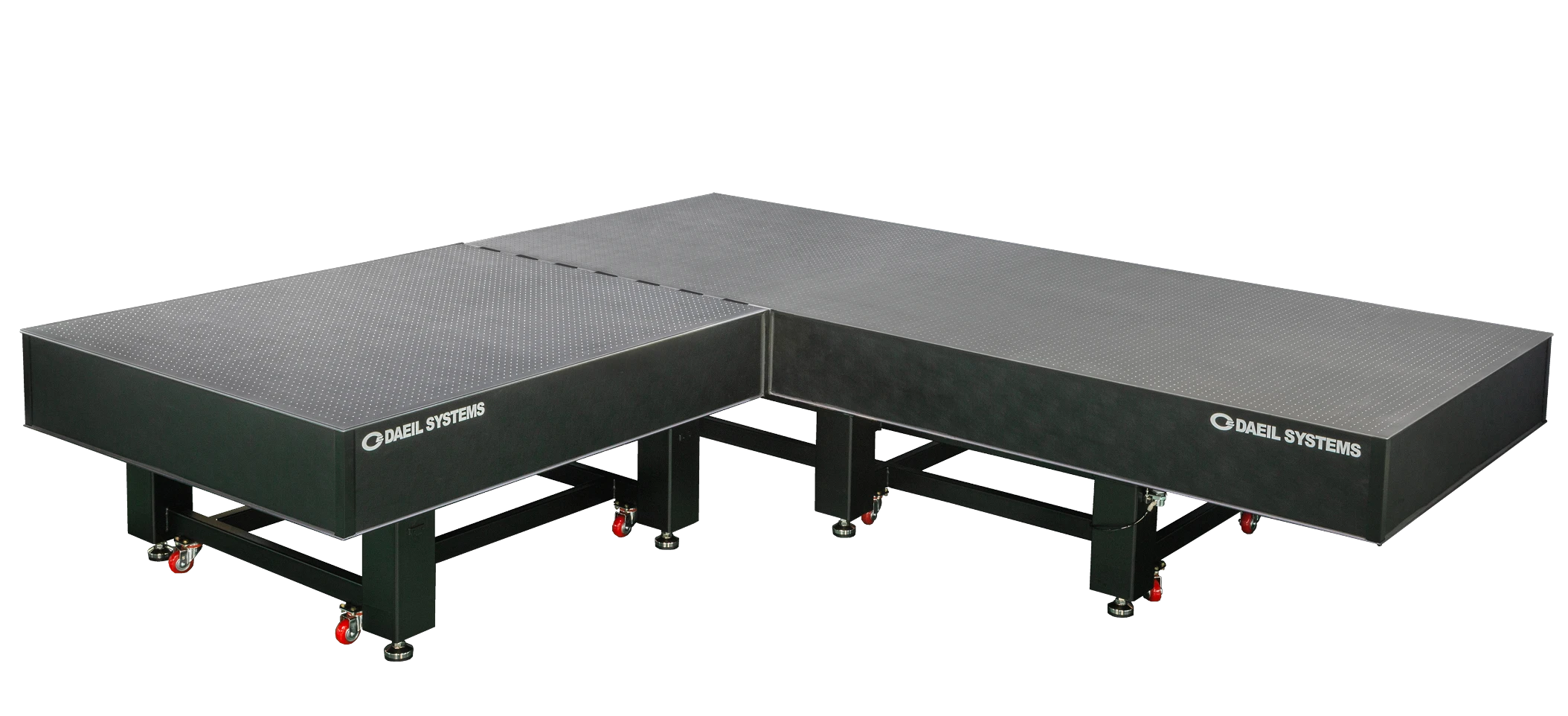
Joined Optical Table.Joined Table Systems allow optical tables to be connected in "L", "T", or cross-shaped configurations—end-to-end, side-to-side, or mixed. Ideal for large or complex setups, these matched systems are precision-assembled and tested in-factory for flatness, then shipped dismantled for easy on-site assembly.
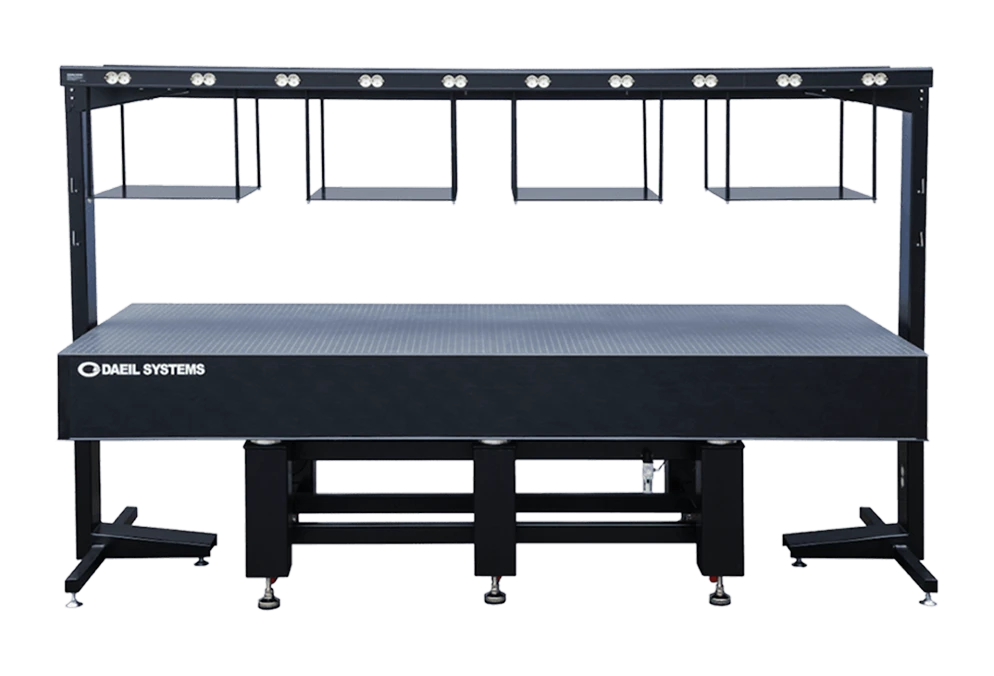
Overhead Shelf System.Overhead Optical Table Shelf Systems streamline lab space, supporting power supplies, controllers, oscilloscopes, and more. Dual-sided top outlets offer easy access to power, while adjustable shelves provide flexible, efficient organization.
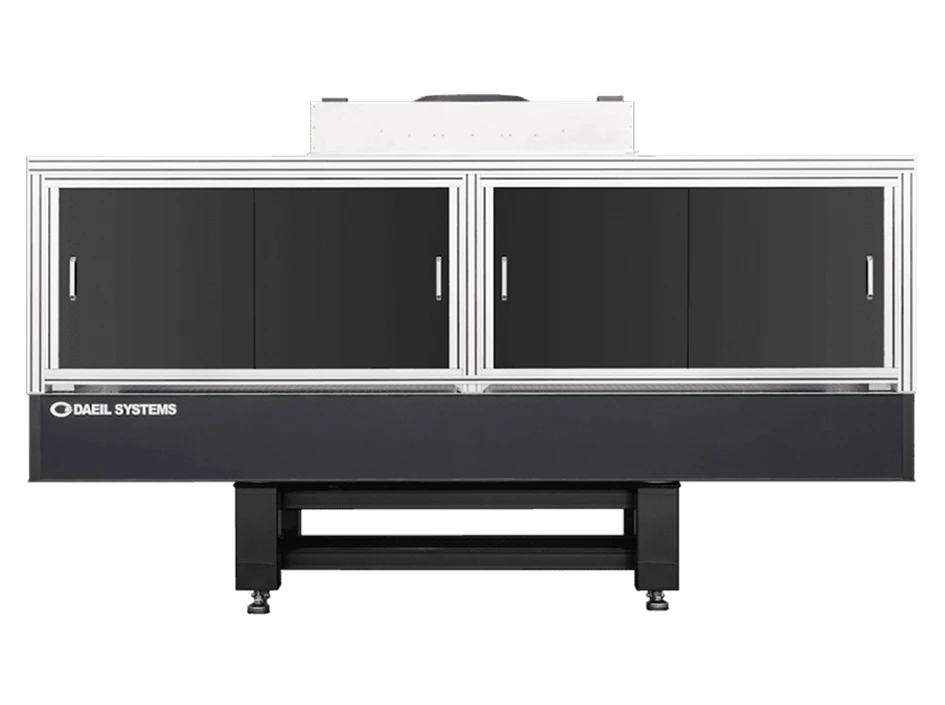
Table Enclosure.Our optical table enclosure is a fully custom, rigid housing designed to protect sensitive experiments from dust, drafts and ambient light while keeping your setup accessible and easy to work with.