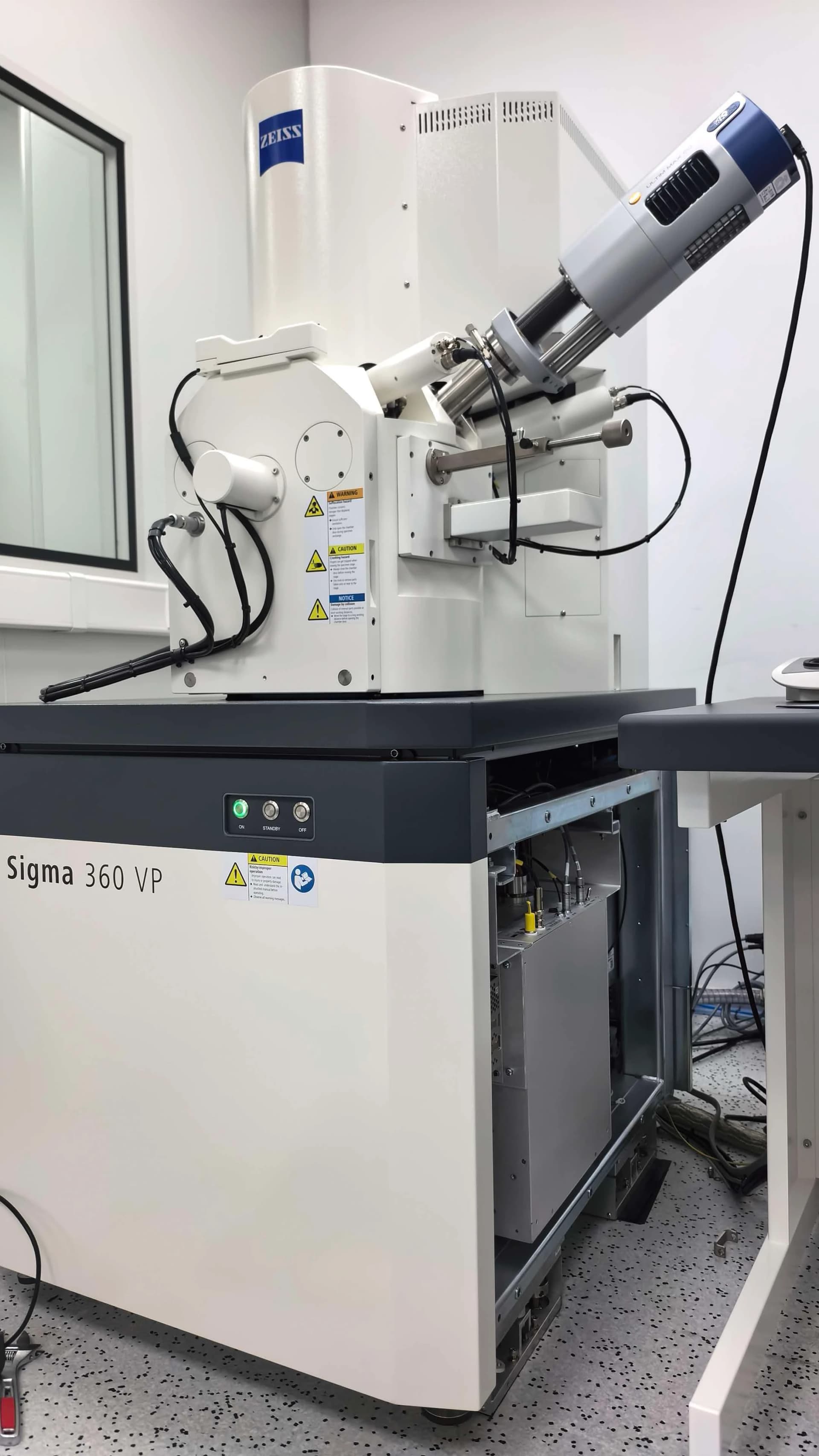
ZEISS Sigma 360 FE-SEM DVIA-ULFB700 Installation Report
Contents
Overview
Following the installation of DVIA-ULFB700 at Wuhan, tuning and vibration measurement were performed.
Vibration measurement was conducted with the equipment in the Turned off state.
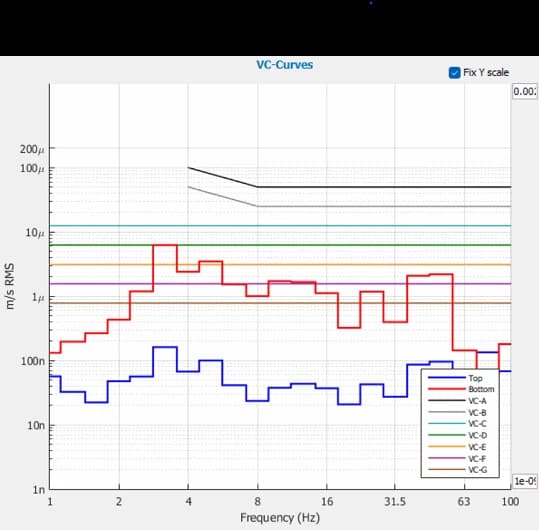
Data is represented in VC Curve format and reference material on the vibration level is provided.
Vibration Isolation System Information
Model: DVIA-ULFB700
Serial Number: 260203R2
Engineer
Taehun KIM · DAEIL SYSTEMS
Tuning Date
2026.08.04
End User
Hubei University of Technology
Number of Tuning Trial
1st
Site
Wuhan
Equipment
Manufacturer: ZEISS
Equipment: FE-SEM
Model: Sigma 360
Vibration Specification
Horizontal
| Frequency [Hz] | Allowable [mm/s² RMS] |
|---|---|
| 1 | 0.04 |
| 10 | 0.04 |
| 10 | 0.17 |
| 20 | 0.17 |
| 20 | 0.3 |
| 70 | 0.3 |
| 70 | 2 |
| 100 | 2 |
Vertical
| Frequency [Hz] | Allowable [mm/s² RMS] |
|---|---|
| 1 | 0.03 |
| 8 | 0.03 |
| 8 | 0.15 |
| 45 | 0.15 |
| 45 | 2 |
| 100 | 2 |
Equipment Condition
Turned off
Tuning Request
Conclusion
Tuning of the DVIA-ULFB700 (S/N 260203R2) was carried out on 2026.08.04, air pressure setting, and control gain adjustment on each axis (Vertical, Left to Right, Front to Back). Vibration measurement was performed with the equipment in the Turned off condition, and the measured levels satisfied the vibration specification required by ZEISS for the Sigma 360 FE-SEM on all three axes. The DVIA-ULFB700 is therefore confirmed to deliver the isolation performance required for the installed equipment.
Measurement Summary
Equipment Condition: Turned off
| Measurement Point | Vibration Specifications | Axis | Floor | DVIA-ULFB700 |
|---|---|---|---|---|
| 1. Floor 2. DVIA-ULFB700 | See Section 9 | Vertical | ✓ PASS | ✓ PASS |
| Left to Right | ✓ PASS | ✓ PASS | ||
| Front to Back | ✓ PASS | ✓ PASS |
Measurement Data Obtained via UI Program
Vertical Autospectrum
Left to Right Autospectrum
Front to Back Autospectrum
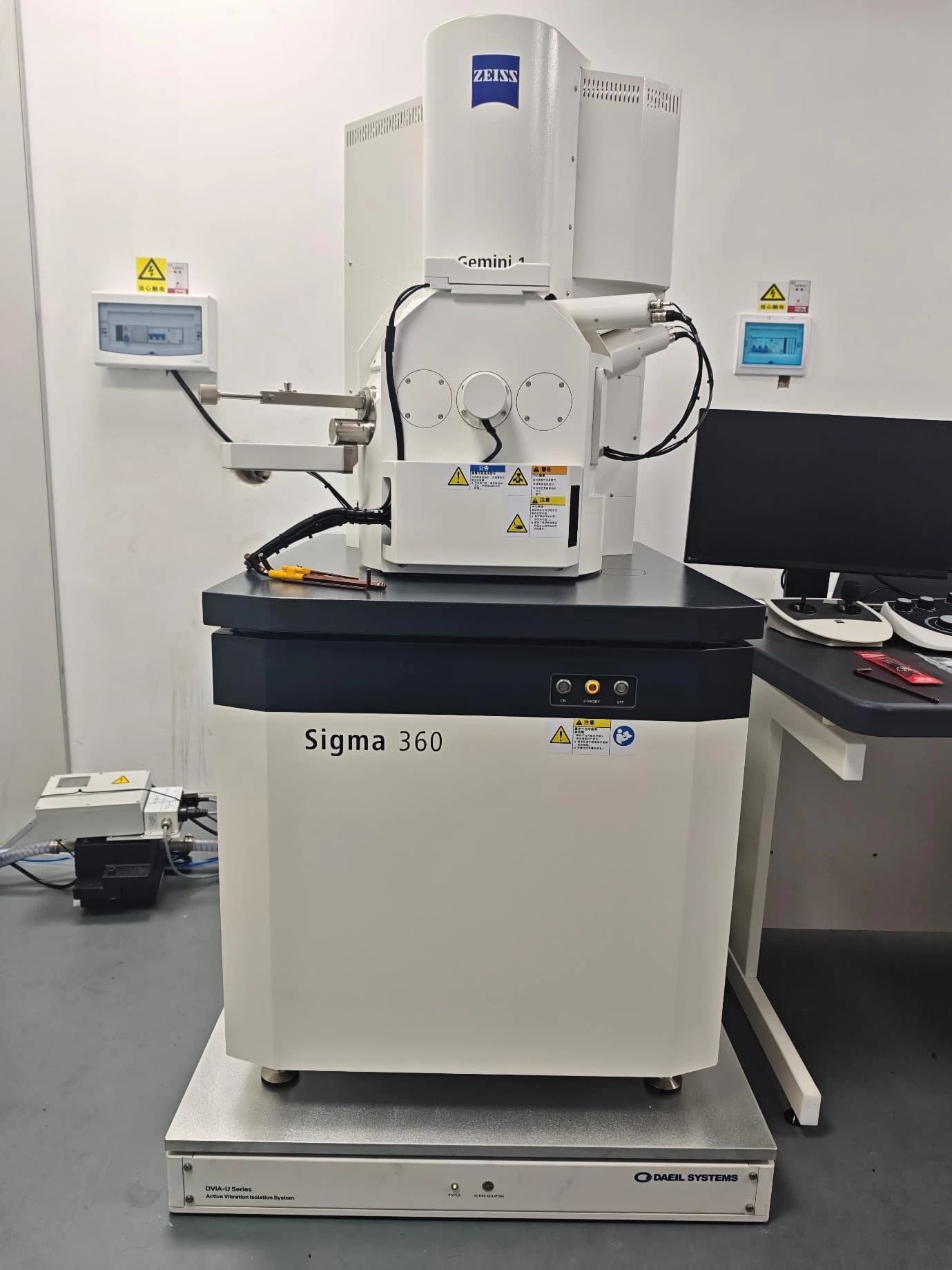
Installation Photo
Reference
The table below classifies vibration levels based on IEST-RP-CC012.2.
Notes:
1. As measured in one-third octave bands of frequency over the frequency 8 to 80 Hz (VC-A and VC-B) or 1 to 80 Hz (VC-C through VC-G).
2. The detail size refers to the width in the case of microelectronics fabrication, the particle (cell) size in the case of medical and pharmaceutical research, etc. It is to imaging associated with probe technologies, AFMs, and nanotechnology.
The information given in this table is for guidance only. In most instances, it is recommended that the advice of someone knowledgeable about applications and vibration requirements of the equipment and processes be sought.
Share this Case Study
Case Study Information
Related Case Studies
Kunming Metallurgical Research Institute ZEISS Sigma 360 DVIA-ULFB700 Installation Report
ZEISS FE-SEM Sigma 360 DVIA-ULFB700 (250529R5) Installation Report